Understanding the Conversion Funnel
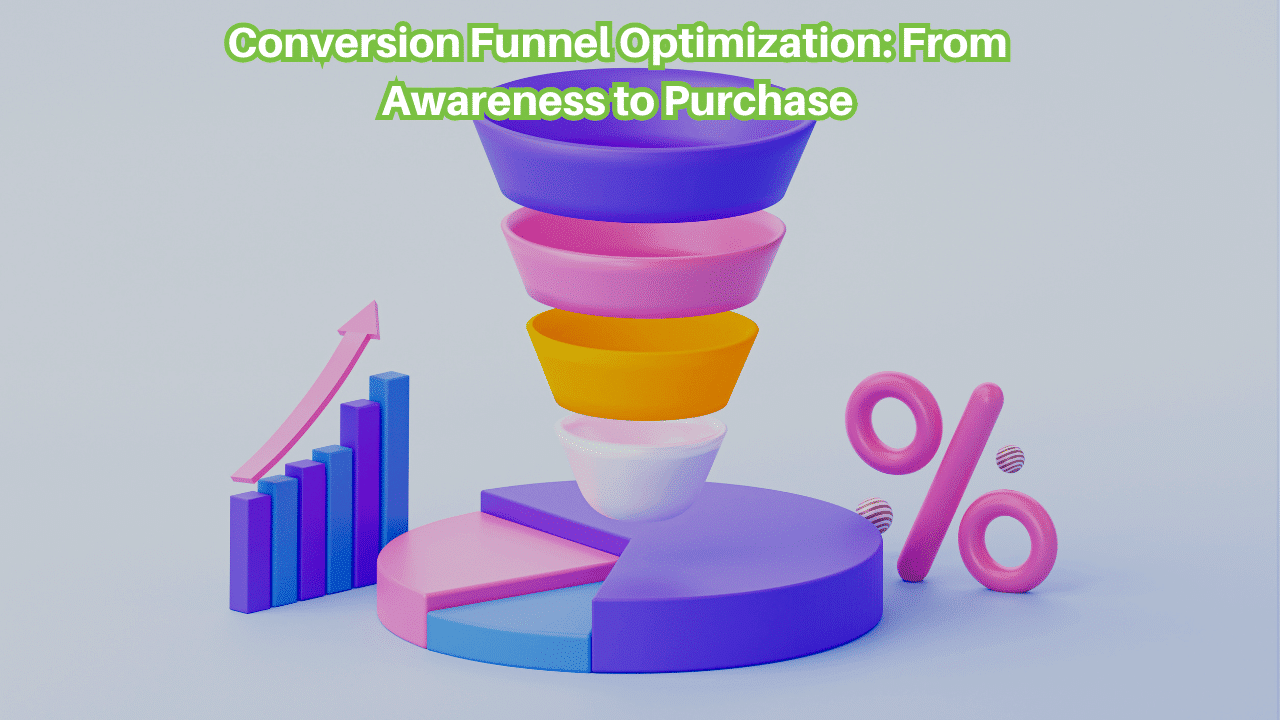
In digital marketing, conversion funnel optimization is the strategic process of guiding potential customers from their first interaction with your brand all the way to making a purchase. Think of it like a customer’s journey through a well-designed store: you greet them at the door (awareness), help them explore (consideration), and then assist them in checking out (conversion).
The funnel typically has three main stages:
- Awareness: The prospect discovers your brand or product.
- Consideration: They evaluate your offer and compare it to competitors.
- Conversion (Purchase): They take the desired action, whether it’s buying, subscribing, or booking.
Each stage requires tailored strategies, and optimizing these moments ensures that fewer prospects “leak” from your funnel, meaning more sales and stronger customer retention.
Optimizing Each Stage of the Funnel
Stage 1 – Awareness: Attract the Right Audience

At this stage, the goal is visibility. You need to position your brand where your ideal customers already spend time. Content marketing, SEO, and social media campaigns work best here.
Practical ways to optimize:
- Create educational content: Blog posts, videos, and infographics that solve common problems.
- Leverage SEO: Use targeted keywords and search intent optimization to rank content higher.
- Social proof: Encourage satisfied customers to share testimonials or experiences.
Example: A skincare brand might publish guides about “how to choose moisturizers for oily skin,” catching the attention of users before they’re ready to buy.
Stage 2 – Consideration: Build Trust and Engagement
This is where prospects weigh their options. Here, credibility and consistency matter most. A common mistake is to overwhelm users with offers too early; instead, focus on education and reassurance.
Optimization tips:
- Offer comparison guides or free trials so users can see real value.
- Use email marketing sequences with useful insights rather than aggressive sales messages.
- Highlight case studies or success stories relevant to your niche.
In practice: A software company could use a platform like HubSpot or Mailchimp to nurture leads through personalized drip campaigns that gradually answer pain points.
Stage 3 – Purchase: Remove Friction and Encourage Action
By now, the user is almost ready to buy, your task is to make the process smooth and appealing.
Ways to optimize conversion:
- Simplify checkout forms to reduce abandonment.
- Offer multiple payment options.
- Use limited-time offers or clear CTAs to prompt immediate action.
- Implement remarketing ads to re-engage visitors who didn’t convert on their first visit.
Example: An e-commerce brand might use tools like Google Analytics or Hotjar to identify where users drop off and adjust the design accordingly.
Measuring and Refining the Funnel
Continuous Improvement through Data
Funnel optimization is ongoing. Regularly track metrics like click-through rate (CTR), conversion rate, and engagement time. Analyze user behavior with tools such as Google Analytics or SEMrush to detect patterns.
Common Pitfalls to Avoid
- Ignoring micro-conversions (like newsletter sign-ups).
- Focusing only on the bottom of the funnel.
- Treating all users the same regardless of intent or segment.
Pro Tip: Run A/B tests to discover which communication style or landing page layout works best for each segment.
FAQ
- How do I know if my conversion funnel is performing well?
Track metrics at each stage. High traffic but low conversions may indicate strong awareness but poor consideration or purchase-stage experience. - Do I need different content for each funnel stage?
Yes. People in the awareness stage want educational content, while those near purchase look for proof and trust signals. Matching your content to each stage is key to effective conversion funnel optimization.
By understanding the psychology behind each stage, from awareness to purchase, and making data-driven adjustments, you’ll not only increase conversions but also build long-term relationships with your customers.