
Why Your Website Shapes First Impressions
A website is more than a digital place where people learn about a business. It is often the first evidence a potential customer uses to decide whether a company feels professional, reliable, and worth contacting.
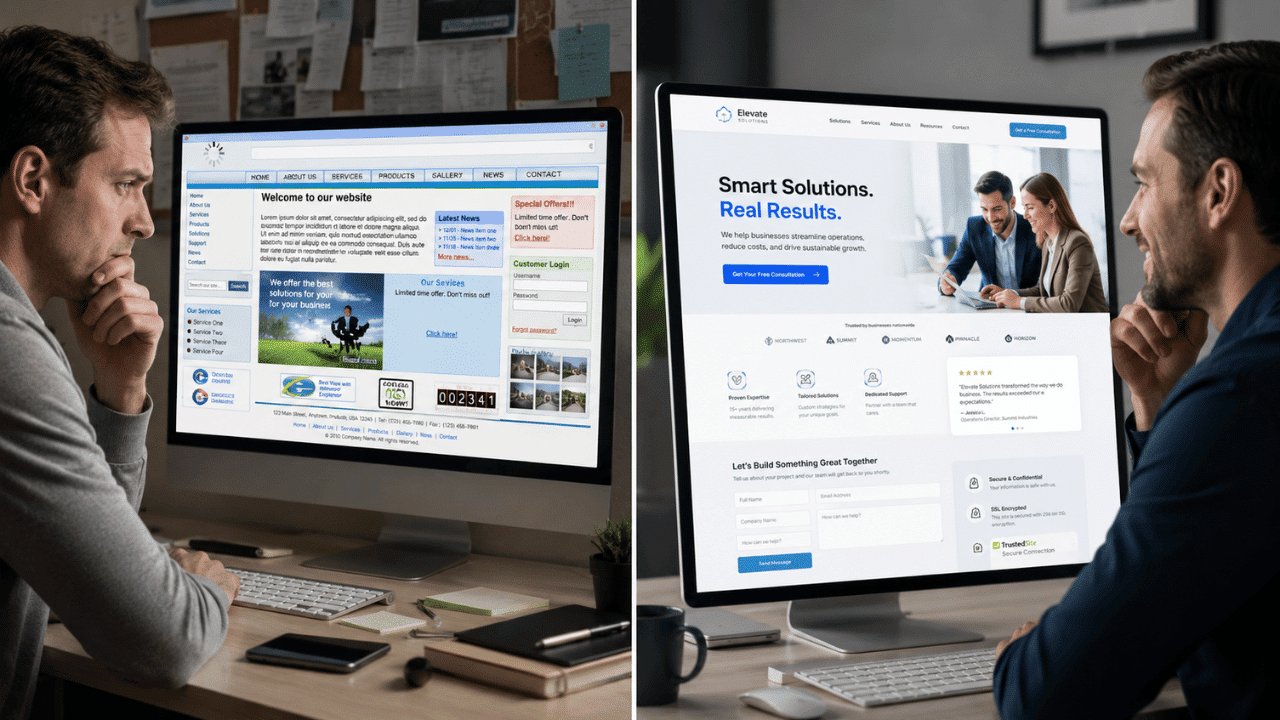
Think about walking into two stores. One is clean, organized, clearly priced, and staffed by people who can answer questions. The other has broken signs, cluttered shelves, and no clear information. Even if both sell the same product, most customers will feel safer buying from the first store. A website creates the same type of impression online.
In practice, visitors begin forming opinions within moments. Clean design, clear navigation, accurate information, and professional messaging contribute to website credibility before a visitor has spoken with anyone from the business.
Design Is Only One Part of Trust
An attractive site can help, but appearance alone is not enough. Visitors also want proof that there is a legitimate business behind the design. Contact details, transparent pricing when appropriate, customer testimonials, case studies, policies, and useful content all reduce uncertainty.
A common mistake is investing heavily in visual design while ignoring outdated information or confusing copy. A polished website advertising an expired promotion, for example, can create more doubt than a simple but accurate site.
What Makes Visitors Feel Comfortable Taking Action?
Trust becomes especially important when a website asks someone to make a decision. That decision might be purchasing a product, requesting a quote, booking an appointment, or submitting personal information.
Imagine a customer comparing two service providers. One website clearly explains the service, introduces the team, displays recent reviews, and provides several ways to get in touch. The competitor has a vague homepage and a contact form with no address, phone number, or explanation of what happens next. The first company usually feels like the safer choice.
Strong online trust comes from reducing these small moments of uncertainty.
Practical Ways to Strengthen Your Website
Businesses do not necessarily need a complete redesign. Start by improving the signals visitors notice most:
- Keep contact information, prices, services, team details, and opening hours accurate.
- Use genuine testimonials, reviews, certifications, case studies, or client results when available.
- Make navigation simple so important information can be found quickly.
- Check mobile performance and loading speed with tools such as Google PageSpeed Insights.
- Use clear calls to action that explain exactly what happens after a visitor clicks.
Security matters as well. HTTPS, secure payment systems, privacy information, and familiar checkout processes reassure visitors when personal or financial data is involved.
Content Can Build Authority Before a Conversation Begins
Helpful content gives businesses another opportunity to demonstrate expertise. A contractor explaining common renovation problems or an accountant answering practical tax questions shows potential clients that the company understands their concerns.
The goal is not to sound overly technical. The goal is to make visitors think, “These people understand what I need, and I feel comfortable speaking with them.”
Frequently Asked Questions
How does a professional website increase customer trust?
A professional website reduces uncertainty. Clear information, consistent branding, genuine proof of experience, secure browsing, and easy contact options help visitors understand who the business is and what they can expect. When those elements work together, contacting or purchasing from the company feels less risky.
Can an outdated website hurt a business’s reputation?
Yes. Broken links, old information, slow pages, poor mobile usability, or outdated offers can make visitors question whether the business is active or attentive to detail. Regularly reviewing content, testing forms, updating key pages, and monitoring site performance can prevent small website problems from becoming larger reputation problems.