What a Website Really Does in the Customer Journey
More than an online brochure
The role of a website in the modern customer journey is much bigger than simply “being online.” In simple terms, your website helps people understand who you are, what you offer, why they should trust you, and what they should do next.
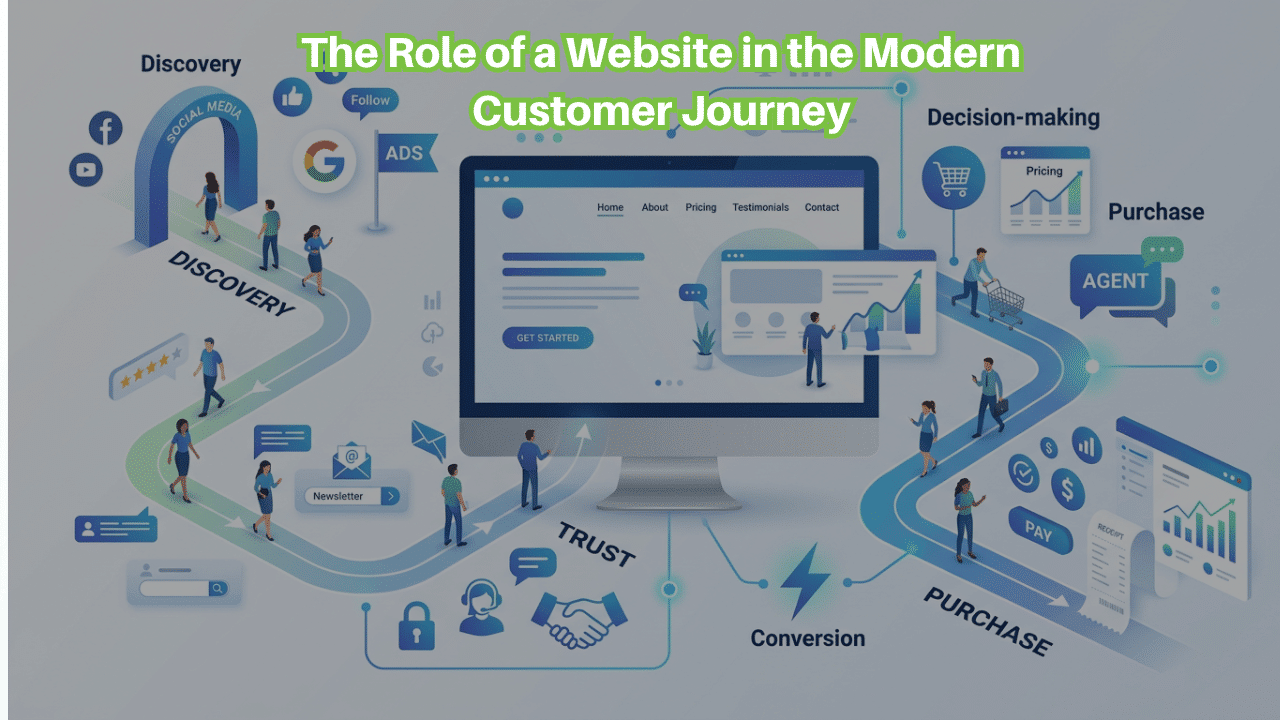
Think of it like a storefront, sales representative, product guide, customer service desk, and credibility check all in one place. A potential customer may first discover your brand through social media, Google, an ad, or a referral. But in many cases, they visit your website before making a serious decision.
In practice, people use websites to answer silent questions: “Is this business legitimate?”, “Can they solve my problem?”, “How much does it cost?”, “What happens if I contact them?”, and “Why should I choose them over someone else?”
A common mistake is treating a website as a one-time design project instead of an active business tool. A modern website should support awareness, consideration, decision-making, and even post-purchase confidence. If your site is confusing, slow, outdated, or vague, customers may leave before they ever speak to you.
How a Website Supports Every Stage of the Buying Decision

From first visit to final action
Your website plays a different role depending on where the visitor is in their decision process. Someone who is just learning about a problem needs education. Someone comparing providers needs proof. Someone ready to buy needs a clear next step.
Here is how your website can guide users naturally:
- Awareness stage: Use helpful blog posts, service pages, and clear messaging to explain problems and solutions in simple language. For example, a dental clinic might publish content about signs you need a root canal, not just a page saying “Book now.”
- Consideration stage: Show why your solution is valuable through case studies, testimonials, pricing guidance, comparison pages, or FAQs. This is where trust starts to grow.
- Decision stage: Make the next step obvious with clear calls to action, simple forms, visible contact details, and reassurance such as guarantees, reviews, or security badges.
- Post-purchase stage: Support existing customers with resources, onboarding pages, help articles, appointment details, or follow-up content.
Tools like Google Analytics, Hotjar, or Search Console can help you see where users arrive, what pages they view, and where they drop off. This is especially useful because what business owners think customers do is often different from what the data shows.
For example, a software company might assume visitors want technical details first. But analytics may reveal that most users go straight to pricing, reviews, or demo pages. That insight can lead to better page structure, stronger calls to action, and improved conversion optimization.
Your website also acts as a key digital touchpoint. It connects marketing channels together. A person may see your Instagram post, search your brand name, read your About page, compare services, and then submit a contact form days later. Without a strong website, that path becomes broken.
FAQ: Websites and the Customer Journey
Why is a website important if my business already uses social media?
Social media is useful for visibility and engagement, but your website gives you more control. Algorithms change, posts disappear quickly, and users may not find the exact information they need. Your website organizes your message, services, proof, and contact options in one reliable place.
In practice, social media often creates interest, while the website helps turn that interest into action.
What makes a website effective in the modern customer journey?
An effective website is clear, fast, trustworthy, and easy to navigate. It should explain what you do, who you help, why you are credible, and what visitors should do next.
The best websites are built around customer questions, not just company information. If your site answers real concerns and removes friction, it becomes a powerful part of the buying process.