What Lead Generation and Online Sales Really Mean
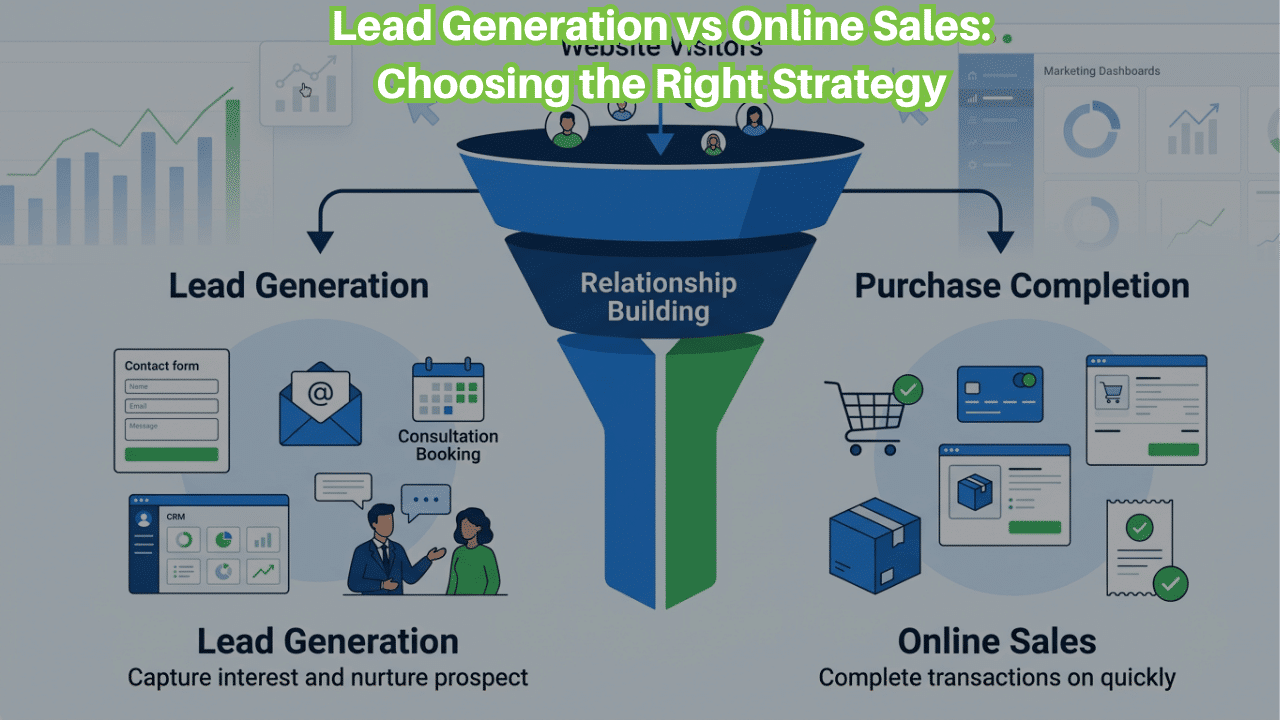
When comparing lead generation vs online sales, the simplest way to understand the difference is this: lead generation focuses on starting a relationship, while online sales focuses on completing a purchase.
Lead generation is about collecting contact information from potential customers who are interested but not ready to buy yet. This could happen through a free consultation form, a downloadable guide, a webinar registration, or a quote request. For example, a law firm, real estate agency, or B2B software company often needs to speak with a prospect before closing a deal.
Online sales, on the other hand, are more direct. A customer visits your website, chooses a product or service, pays, and completes the transaction. This works well for eCommerce stores, digital products, subscriptions, tickets, or low-risk purchases where people do not need much personal guidance.
In practice, the right choice depends less on what you want and more on how your customers buy. If they need trust, comparison, or a custom offer, lead generation is usually stronger. If they already understand the product and can make a quick decision, direct selling online may be the better path.
A common mistake is assuming every business should push for immediate purchases. For high-value services, this can hurt results because people may not be ready to commit. Instead, capturing the lead first gives your sales team or email sequence time to educate, answer objections, and build confidence.
How to Choose the Right Strategy for Your Business
Choosing between lead generation and online sales starts with understanding your offer, your audience, and your buying cycle. A $25 skincare product and a $5,000 consulting package should not use the same strategy.
If your product is simple, affordable, and easy to explain, online sales can create a smoother path to revenue. Think of a customer buying a phone case, an online course, or a monthly fitness app. They can review the page, check testimonials, compare prices, and purchase without speaking to anyone.
If your offer is complex, expensive, or personalized, lead generation usually performs better. For example, a solar panel company may need to inspect a property before giving a quote. A marketing agency may need to understand a client’s goals before proposing a plan. In these cases, asking for an instant purchase would feel unrealistic.
Practical Decision Factors

Use these questions to guide your decision:
- Is your product easy to understand without a conversation? If yes, online sales may work well.
- Does your customer need a quote, demo, or consultation? If yes, lead generation is likely better.
- Is the price high enough that people hesitate before buying? If yes, nurture the lead first.
- Can your website handle secure checkout and product delivery? If yes, direct online selling is practical.
- Do you have a sales team or CRM process? If yes, lead generation can be easier to scale.
Tools like Google Analytics, HubSpot, Shopify, or Meta Ads Manager can help you track where people drop off and which approach produces better results. For example, if many visitors view your pricing page but do not buy, a consultation form may convert better than a checkout button.
This is where the conversion funnel matters. Some audiences need more steps before taking action. Others are ready to buy immediately if the offer, price, and trust signals are clear.
Blending Both Strategies and Common Questions
The best answer is not always one or the other. Many businesses use both strategies together. An online store may sell products directly while also collecting emails for discounts and future promotions. A software company may offer a free trial, then guide qualified leads toward a paid plan.
In real business growth, flexibility matters. If you sell a low-cost product, focus on reducing friction at checkout. If you sell a premium service, focus on building trust before asking for commitment. Strong testimonials, clear landing pages, helpful email follow-ups, and retargeting ads can support both models.
A smart approach is to test both paths. Run one campaign that sends visitors to a purchase page and another that sends them to a lead form. Compare not only the number of conversions, but also the quality and final revenue. Sometimes fewer leads bring more profit because they are better qualified.
The goal is not just traffic. The goal is choosing a strategy that matches how your customers make decisions and how your business closes revenue.
FAQs
Is lead generation better than online sales?
Not always. Lead generation is better for high-value, complex, or service-based offers where customers need more information before buying. Online sales are better for simple, affordable, and easy-to-purchase products.
Can a business use lead generation and online sales together?
Yes. Many businesses combine both. For example, an eCommerce brand can sell products directly while collecting emails for future offers. This supports stronger customer acquisition and creates more opportunities to convert visitors over time.