
When potential customers visit your website, they want more than promises. They want reassurance that your business can deliver what it offers. That is where testimonials become valuable. Learning how to use testimonials to increase conversions can help you build credibility, address customer concerns, and encourage visitors to take action. Whether you sell products or provide services, authentic feedback can make your marketing more persuasive.
Why Testimonials Matter for Conversions
Testimonials are statements from real customers describing their experiences with a business, product, or service. They provide social proof, showing potential buyers that others have already trusted your company. Think about choosing between two service providers. Both offer similar services, but one website features detailed feedback from satisfied customers. Which business would you feel more comfortable contacting?
In practice, testimonials help reduce uncertainty. They give visitors additional information when deciding whether to request a quote, schedule an appointment, or complete a purchase. However, a common mistake is using vague statements such as “Great service!” without explaining what made the experience positive. Specific feedback describing a problem, the service provided, and the customer’s experience is generally more useful.
How to Use Testimonials to Increase Conversions
The effectiveness of testimonials depends on their credibility, relevance, and placement. Simply collecting positive comments is not enough. You need to present them where potential customers are making decisions.
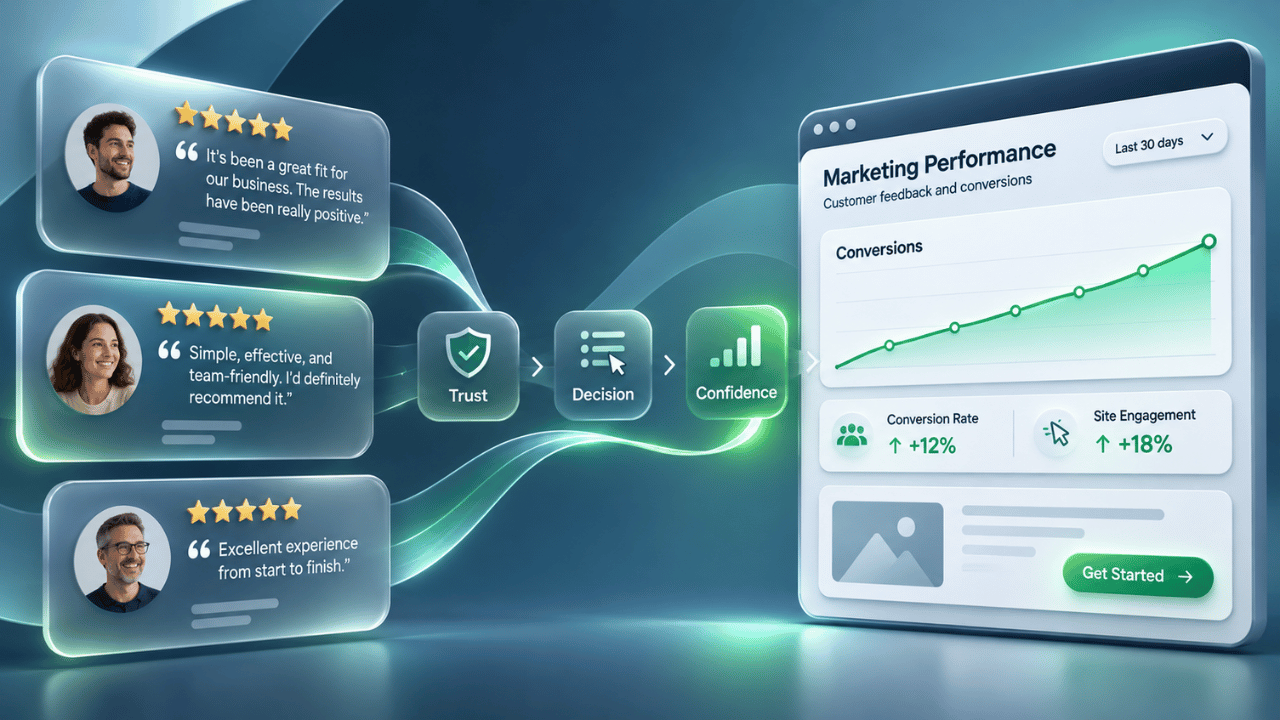
Choose Testimonials That Address Real Concerns
Select feedback that answers questions your audience may have about reliability, communication, product quality, or customer service. For example, a landscaping company might feature a customer’s experience with project communication and scheduling. A marketing agency could highlight feedback describing how clearly its team explained a campaign’s performance. These details help readers imagine what working with your business might look like.
Place Testimonials Where Decisions Happen
Strategic placement makes testimonials easier to notice when visitors need reassurance.
Consider these three locations:
- Service pages: Include feedback relevant to the specific service being offered.
- Landing pages: Position testimonials near calls to action to support purchasing or inquiry decisions.
- Contact pages: Feature brief testimonials that reinforce confidence before visitors submit a form.
Use genuine, permission-based feedback. Adding a customer’s name, business, or photo when authorized can strengthen credibility. Never invent testimonials or alter their meaning.
Measure Their Impact
Tools such as Google Analytics 4 can help you monitor form submissions, purchases, and other conversion events. You can also run A/B tests comparing a page with testimonials against a version without them. This helps determine whether the feedback contributes to measurable improvements rather than relying on assumptions.
Turn Customer Experiences Into Conversion Opportunities
Testimonials are more than positive comments. They are valuable indicators of customer satisfaction that can reinforce your brand’s credibility and support informed purchasing decisions. Their effectiveness depends on authenticity, relevance, and strategic placement. Businesses that consistently collect meaningful feedback, present it transparently, and evaluate its impact can build stronger relationships with potential customers.
Ultimately, learning how to use testimonials to increase conversions is about demonstrating value through real experiences rather than relying exclusively on promotional claims. The strongest marketing message is often the one your satisfied customers communicate on your behalf.
Frequently Asked Questions (FAQ)
How Many Testimonials Should a Website Have?
There is no universal number. Start with two or three relevant testimonials on important service or landing pages. Prioritize authenticity and usefulness over quantity. Refresh them as you receive new customer feedback.
Can Testimonials Increase Conversions for Small Businesses?
Yes. Testimonials can be particularly valuable for small businesses because potential customers may be unfamiliar with their services. Authentic customer reviews can help establish trust, answer common questions, and support purchasing decisions.
Final Thoughts
Testimonials work best when they tell believable stories, address customer concerns, and appear at the right moment. By selecting specific feedback, placing it strategically, and measuring results, businesses can turn real customer experiences into a more effective conversion strategy.